Complete Guide on ePUB DRM Security
Summarize this blog with your favorite AI:
Complete Guide on ePUB DRM Security – TL;DR
Digital publishing makes content distribution faster, but it also increases the risk of unauthorized copying and sharing. Implementing ePUB DRM Security helps publishers protect their intellectual property by controlling how eBooks are accessed, used, and distributed. This protection is essential for organizations distributing valuable digital content at scale.
A strong ePUB DRM Security framework combines encryption, authentication, and usage restrictions. These controls prevent unauthorized access, limit copying and printing, and ensure content is delivered securely across devices and platforms. Together, they help publishers maintain control while expanding digital distribution.
Key components of ePUB DRM Security are summarized below.
| DRM Component | What it Does | Why it Matters |
|---|---|---|
| Encryption | Protects the ePUB file from being opened without authorization | Prevents direct access to the raw content |
| User Authentication | Verifies the identity of the reader before granting access | Ensures only licensed users can open the eBook |
| Usage Restrictions | Controls actions like copying, printing, and sharing | Protects content from unauthorized distribution |
| Device Authorization | Limits access to approved devices | Prevents credential sharing and uncontrolled access |
| Time-Based Access | Allows publishers to set expiry dates for access | Supports rentals, subscriptions, and licensing models |
What happens when your premium digital content gets copied and shared without permission? For publishers, educators, and content creators, this is a growing concern in digital publishing. Once an eBook is distributed online, protecting it from unauthorized access becomes critical.
The moment a digital book becomes downloadable, it also becomes vulnerable to uncontrolled distribution. This challenge has made ePUB DRM Security an important part of modern digital publishing workflows. It allows publishers to control how eBooks are accessed, shared, printed, or downloaded.
With effective ePUB DRM Security, organizations can distribute digital content while maintaining strong control over usage and access.
What is ePUB DRM Security?
ePUB DRM Security refers to the technologies used to protect eBooks from unauthorized access and distribution. DRM stands for Digital Rights Management, which controls how digital content can be used. In the case of ePUB files, DRM helps restrict copying, printing, sharing, and downloading beyond permitted limits.
When publishers apply ePUB DRM Security, they define how readers can interact with the content. Access may be limited to specific devices, user accounts, or time periods. These controls ensure that only authorized users can view the eBook.
Unlike simple file protection methods, DRM works at the platform level. The system verifies user credentials before allowing the content to open. This layered protection helps publishers safeguard valuable digital publications.
As digital content distribution continues to grow, ePUB DRM Security has become essential for publishers. It allows them to deliver eBooks widely while maintaining control over intellectual property and licensing rights.
How Does ePUB DRM Security Work?
Protecting digital books requires a structured security workflow. Publishers must secure the file, control who can access it, and manage how the content is used after distribution. ePUB DRM Security follows a systematic process that protects the eBook throughout its lifecycle.
The steps below explain the typical workflow used in ePUB DRM Security.
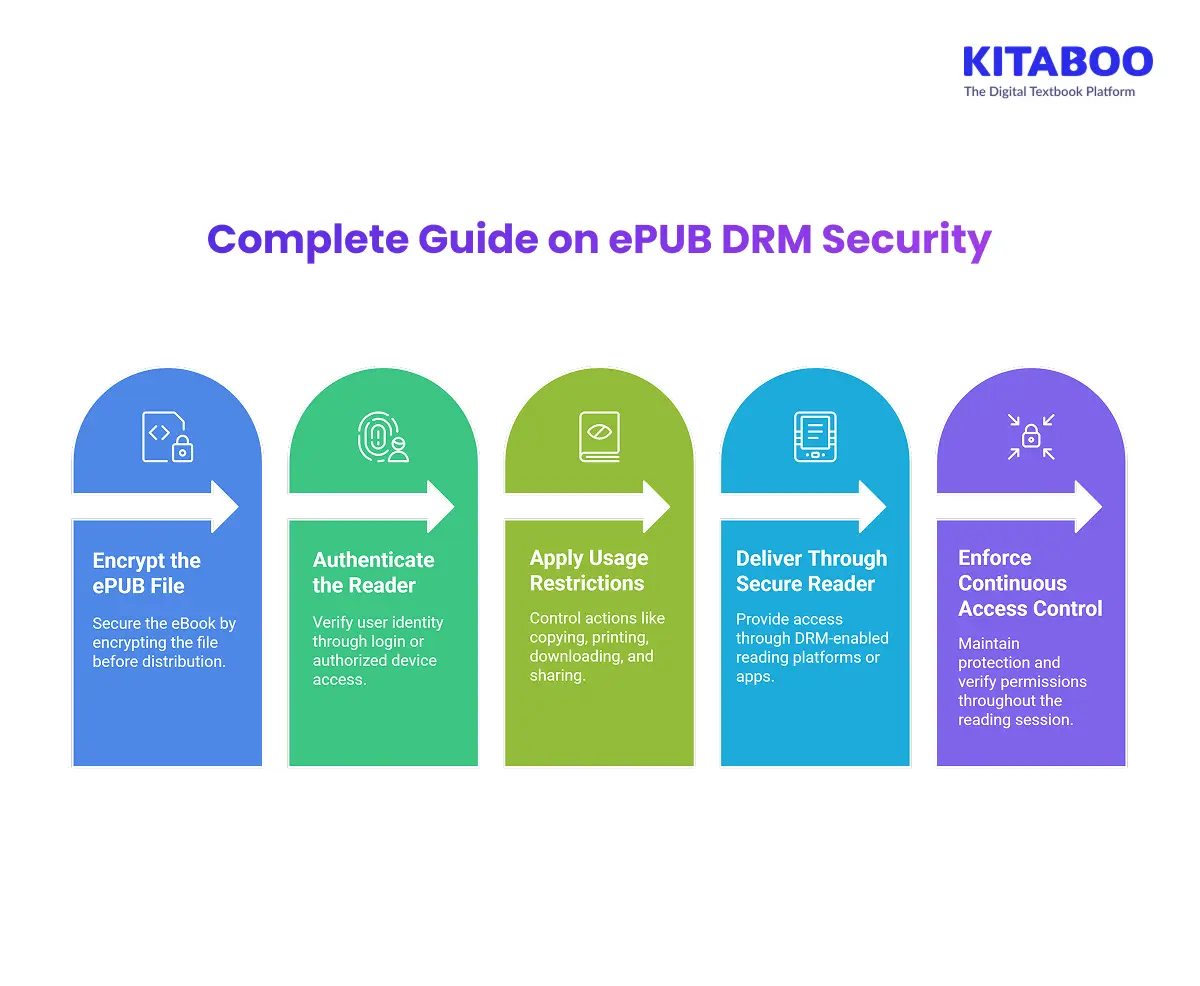
Step 1: Encrypt the ePUB File Before Distribution
The workflow begins by encrypting the ePUB file. Encryption converts the original content into a protected format that cannot be opened directly. Without the correct authorization, the file remains unreadable.
Publishers usually apply encryption when uploading the eBook to a digital publishing platform. This ensures the file is secured before it reaches readers. Even if the file is downloaded, it cannot be accessed without proper permissions.
Step 2: Authenticate the Reader Requesting Access
Once the protected file is delivered, the system verifies the reader’s identity. Users typically log in through a secure reading platform or application. The system then checks whether the user has permission to access the content.
Authentication ensures that only licensed readers can open the eBook. Access may be tied to individual accounts, institutional subscriptions, or authorized devices. This step is essential in the ePUB DRM Security workflow.
Step 3: Apply Usage Policies to the Content
After authentication, the DRM system enforces usage rules defined by the publisher. These policies determine how readers can interact with the content. For example, publishers may restrict copying, printing, or file sharing.
Such controls allow publishers to protect their intellectual property. They can also define access limits based on licensing models, subscription terms, or organizational policies.
Step 4: Enforce Continuous Access Control Through a Secure Reading Environment
The final step is delivering the protected eBook through a secure reading platform. This environment ensures DRM policies remain active while the reader interacts with the content. The platform continuously verifies permissions during the reading session.
By controlling both access and usage, ePUB DRM Security protects the content even after distribution. This workflow allows publishers to share digital books widely while maintaining strong security controls. The continuous authorization enforcement strengthens ePUB DRM Security by ensuring protection remains active even after the file is opened.
Why is ePUB DRM Security Important for eBook Protection?
Distributing digital books without protection exposes publishers to serious risks. Once an eBook is downloaded, it can easily be copied, shared, or redistributed. ePUB DRM Security helps publishers maintain control over how their content is accessed and used. It protects intellectual property while enabling secure digital distribution of eBooks.
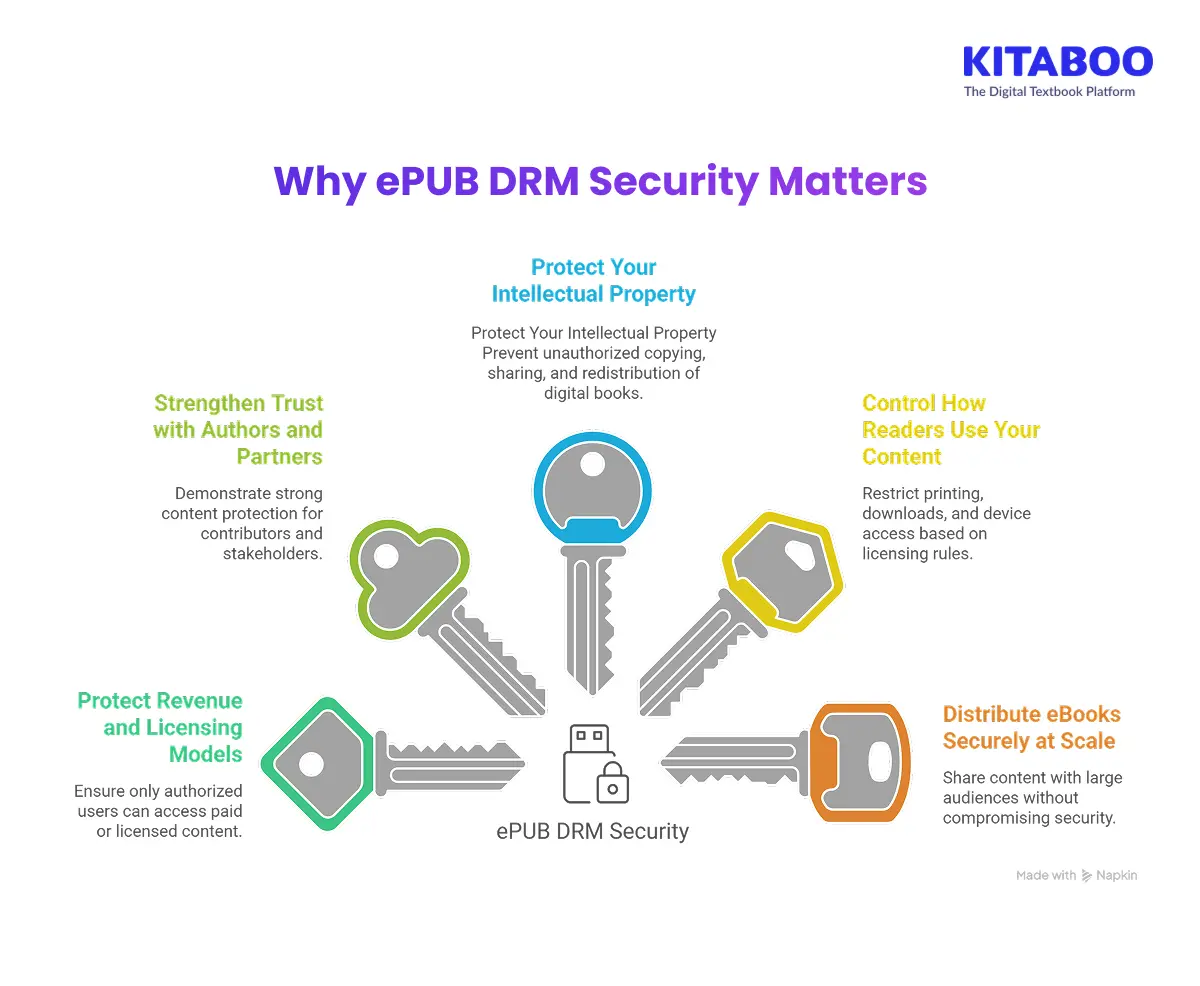
1. Safeguard Your Intellectual Property from Unauthorized Sharing
Digital files can be duplicated and shared within seconds. Without protection, valuable content may circulate far beyond the intended audience. ePUB DRM Security restricts unauthorized copying and redistribution of eBooks.
This protection helps publishers maintain ownership and control over their digital assets. It also discourages piracy and preserves the commercial value of the content.
2. Gain Complete Control Over How Readers Access Your Content
Publishers often need to define how their eBooks can be used. They may want to limit printing, restrict downloads, or allow access only on authorized devices. DRM systems make it possible to enforce these rules.
These controls allow publishers to align content usage with licensing agreements. This flexibility is particularly useful for educational platforms, training programs, and subscription-based services.
3. Distribute Digital Books Securely Across Large Audiences
As digital libraries expand, managing access manually becomes impractical. Publishers may distribute thousands of eBooks to readers across different regions and organizations. ePUB DRM Security enables secure distribution at scale.
DRM platforms automate access control while protecting digital rights. This allows publishers to expand distribution without increasing security risks.
4. Protect Revenue and Sustain Digital Licensing Models
Digital books often represent a significant revenue stream for publishers. Unauthorized distribution can reduce sales and weaken licensing agreements. DRM helps ensure that only authorized users can access the content.
By protecting digital rights, publishers can sustain subscription services and institutional licensing models. This makes ePUB DRM Security essential for long-term digital publishing strategies.
5. Build Trust with Authors and Content Partners
Publishers often work with authors, educators, and content partners who expect their work to be protected. Strong security measures help reassure contributors that their intellectual property will remain safe.
Implementing ePUB DRM Security demonstrates a commitment to responsible digital publishing. It strengthens relationships with authors and partners who rely on secure content distribution.
What Are the Key Features of ePUB DRM Security?
Protecting digital books requires more than simply restricting downloads. Publishers need multiple layers of control to manage how content is accessed, shared, and used. ePUB DRM Security provides these controls through several built-in protection features. The following capabilities help publishers secure their digital content effectively.
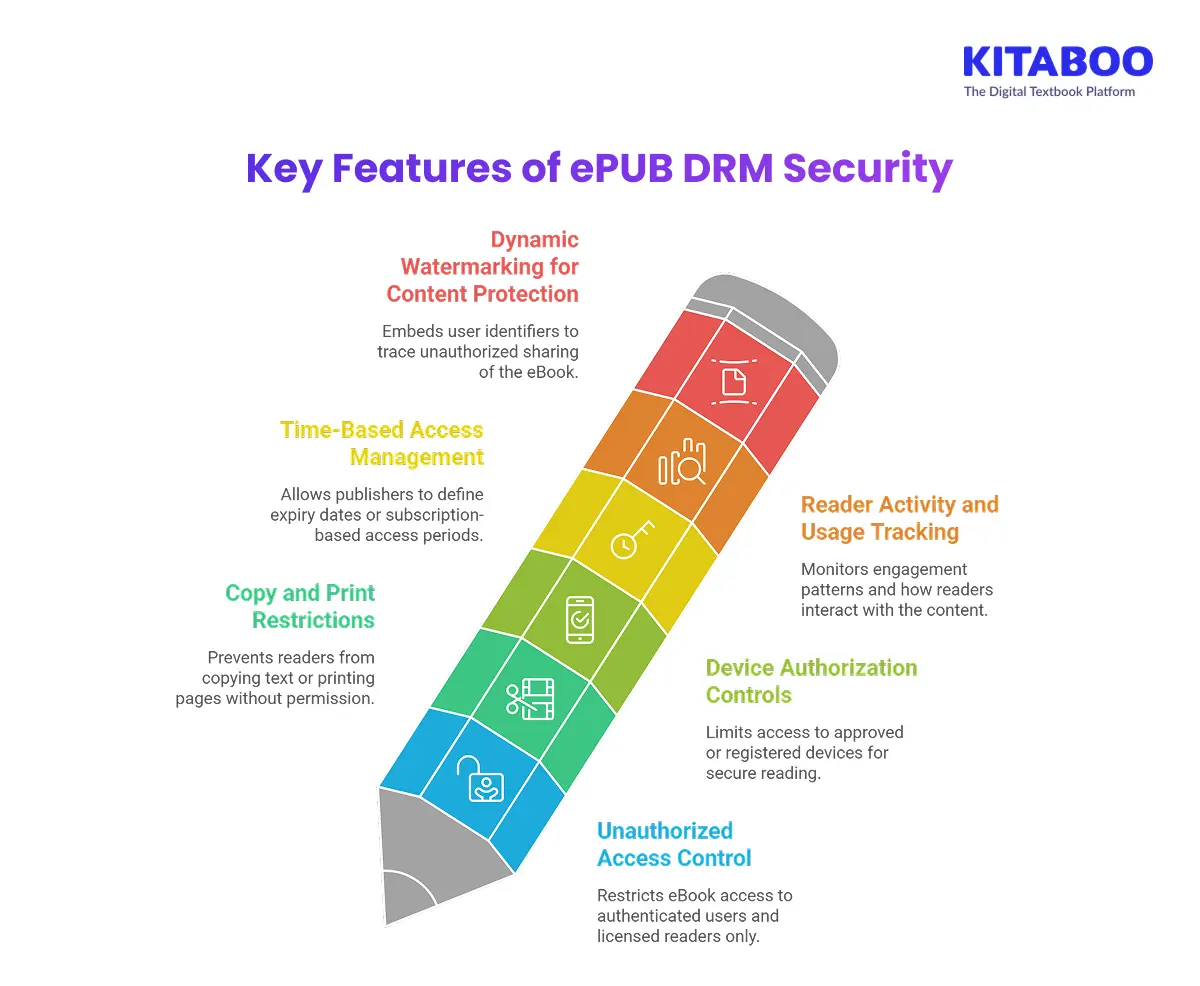
1. Unauthorized Access Control
One of the core features of ePUB DRM Security is controlling who can open the eBook. Access can be restricted to specific users, institutional accounts, or licensed readers. Only authenticated users are allowed to view the content.
This ensures the eBook remains accessible only to authorized audiences. Even if someone downloads the file, they cannot open it without proper permissions.
2. Print and Sharing Restrictions
Publishers often need to control how readers interact with their content. DRM systems allow them to disable copying, restrict printing, or block file sharing. These restrictions prevent readers from distributing the content beyond permitted limits.
Such controls are especially important for educational materials, research publications, and premium digital content.
3. Device Authorization Controls
Many DRM platforms allow publishers to define which devices can access the eBook. Readers may be permitted to open the content only on registered or authorized devices. This prevents users from sharing credentials across multiple devices.
Device authorization helps publishers enforce licensing agreements more effectively. It also ensures content remains within approved reading environments.
4. Time-Based Access Management
Some digital publications are meant to be accessed for a limited time. Course materials, rented eBooks, or subscription-based content often require time restrictions. DRM systems allow publishers to set access expiry dates.
Once the permitted period ends, access to the content is automatically revoked. This feature supports rental models, subscription platforms, and institutional licensing agreements.
5. Reader Activity and Usage Tracking
Many DRM-enabled platforms provide insights into how readers interact with the content. Publishers can track reading patterns, engagement levels, and content usage. These insights help improve digital publishing strategies.
Monitoring reader activity can also help detect unusual access patterns. This strengthens ePUB DRM Security by identifying potential misuse early.
6. Dynamic Watermarking for Content Protection
Dynamic watermarking embeds unique identifiers inside the eBook file. These identifiers may include the reader’s name, email address, or transaction details. If the file is shared illegally, the source of the leak can be traced.
This feature discourages unauthorized distribution because users know the content is traceable. Many modern ePUB DRM Security systems combine watermarking with traditional DRM controls to strengthen protection.
What Are the Key Challenges of ePUB DRM Security?
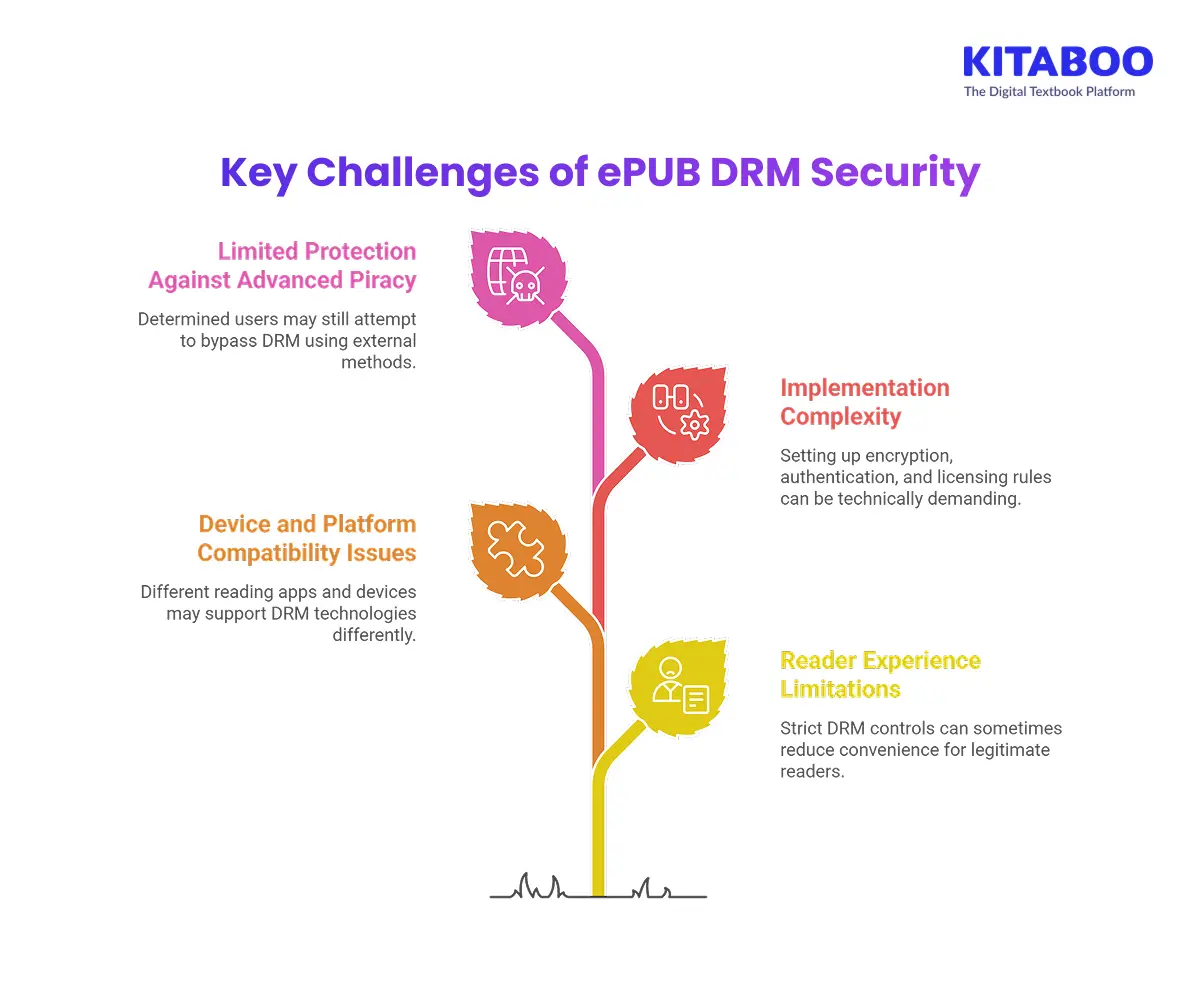
While DRM helps protect digital content, implementing it effectively is not always simple. Publishers must balance strong security with a smooth reading experience. Overly restrictive controls can frustrate legitimate users. ePUB DRM Security requires careful implementation to avoid unintended limitations.
1. Balancing Content Protection with Reader Experience
Strict DRM policies can sometimes interfere with how readers access content. For example, limiting device access or disabling offline reading may reduce convenience. Readers expect flexibility across devices and platforms.
Publishers must therefore design DRM policies carefully. The goal is to protect intellectual property without creating friction for legitimate users.
2. Compatibility Issues Across Devices and Platforms
Different reading devices and applications support DRM in different ways. Some platforms may not support certain DRM technologies. This can create compatibility challenges for publishers distributing content widely.
Ensuring that ePUB DRM Security works consistently across devices requires careful platform selection. Publishers often rely on integrated publishing platforms to manage this complexity.
3. Implementation Complexity for Publishers
Setting up DRM systems can be technically complex. Publishers must configure encryption, authentication, device controls, and licensing rules. Managing these systems may require specialized technical expertise.
For organizations managing large digital libraries, implementing ePUB DRM Security can become operationally demanding. This is why many publishers rely on dedicated digital publishing platforms to simplify the process.
4. Limited Protection Against Determined Piracy
No DRM system can guarantee complete protection against piracy. Determined users may still attempt to bypass restrictions through screenshots, screen recording, or external tools. DRM mainly discourages casual sharing rather than eliminating piracy entirely.
Despite these limitations, DRM still plays an important role in digital publishing. It raises the barrier against unauthorized distribution and helps publishers maintain control over their content.
Conclusion
Digital publishing has made content distribution faster and more accessible than ever before. However, it has also increased the risk of unauthorized copying and sharing. Publishers must therefore protect their digital assets while continuing to deliver seamless reading experiences.
Implementing ePUB DRM Security helps organizations control how their digital books are accessed, shared, and used. Through encryption, authentication, and usage policies, publishers can safeguard their intellectual property while distributing content widely.
At the same time, effective protection requires the right balance between security and usability. To implement these protections effectively, publishers need smart and robust digital publishing platforms. Platforms like KITABOO simplify ePUB DRM Security by providing integrated DRM protection, secure content delivery, and scalable digital publishing infrastructure.
Schedule a KITABOO demo to see how you can protect and distribute your ePUB content securely.
FAQs
Summary
Protecting digital books has become a major priority for modern publishers. As digital distribution grows, the risk of unauthorized copying and sharing also increases. Implementing ePUB DRM Security helps publishers safeguard their intellectual property while delivering content to legitimate readers.
A well-designed ePUB DRM Security framework combines encryption, authentication, and usage controls. These mechanisms restrict copying, control device access, and enforce licensing policies. Together, they allow publishers to distribute eBooks widely without losing control over their digital assets.
At the same time, DRM implementation must balance security with user convenience. Overly restrictive controls can affect the reading experience. With the right tools and platforms, publishers can apply ePUB DRM Security effectively while maintaining seamless digital access for readers.
Discover how a mobile-first training platform can help your organization.
KITABOO is a cloud-based platform to create, deliver & track mobile-first interactive training content.