
The Silent Revenue Leak: How PDF Sharing Is Costing Associations Millions
Summarize this blog with your favorite AI:
Think about the last journal or policy update you sent to members. It was likely a Portable Document Format (PDF). For decades, that format felt like the safest choice for professional societies. It powered medical journals, certification manuals, and policy statements without question. It was reliable and easy to distribute.
But here is the uncomfortable reality. The same portability that made PDFs convenient now enables uncontrolled PDF Sharing. Once downloaded, your content can circulate far beyond your membership base. What once felt secure has quietly become a revenue leak.
At the same time, your members have changed. Their attention spans are shrinking across digital channels. Yet their expectations for high-value, interactive experiences are rising rapidly.
The data makes this gap even clearer. Recent 2025 research shows that interactive digital formats improve information retention by 22% to 50% compared to static materials. That difference directly impacts learning outcomes, certification success, and professional development value.
So the question is not whether to digitize. Most associations already have. The real question is whether a static file format still supports your engagement and revenue strategy. If it doesn’t, it may be time to consider a stronger PDF alternative built for modern member expectations.
Table of Contents
Is Static Content Creating an Experience Gap and Killing the Member Engagement?
Have you noticed members engaging less with your content lately? Many associations serving early career professionals and Gen Z members are noticing a shift. The issue is not always content quality. It is the experience surrounding that content.
Gen Z professionals grew up with interactive, on-demand digital platforms. They are used to streaming, swiping, tapping, and personalizing everything. They expect fast loading, intuitive, Mobile responsive content as a baseline. When they receive a static PDF instead, the contrast feels immediate.
This is the Experience Gap. It is the gap between the high-quality digital experiences members enjoy in their personal lives and the flat documents they receive from their professional association. Over time, that gap affects engagement, perceived value, and long-term loyalty.
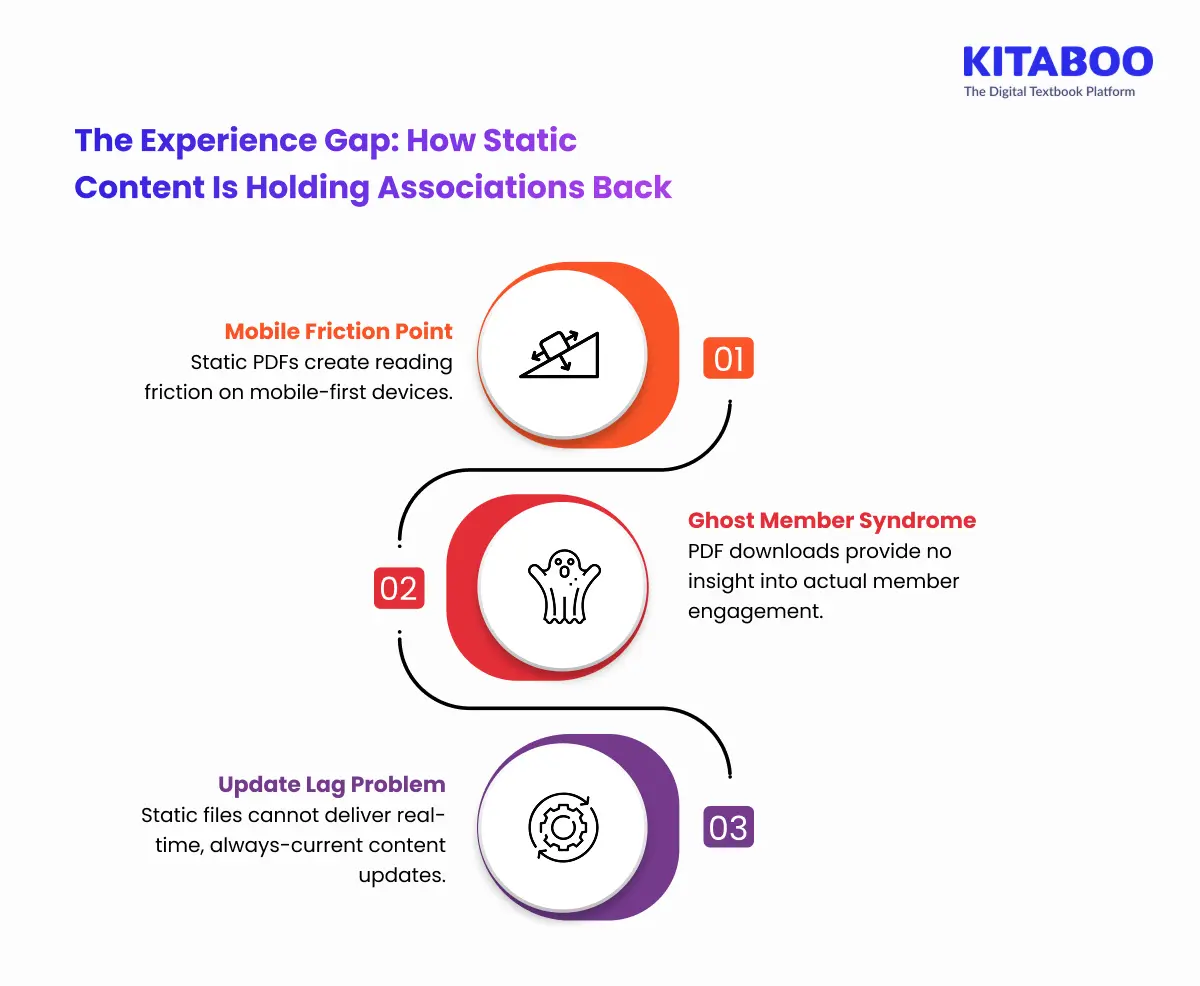
1. The Mobile Friction Point
In 2026, more than 80% of digital content consumption happens on mobile devices. Your members are reading between meetings, while traveling, or during short breaks. They expect content that adapts instantly to their screen size. A static PDF does not do that.
Instead, members pinch to zoom and scroll horizontally to read basic text. Navigation feels clumsy and slow. When accessing information feels like work, most people disengage. This friction reduces readership significantly and eliminates interactive reading experiences.
2. The Ghost Member Syndrome
There is another hidden problem. Static PDFs provide no behavioral insight. Once a member downloads the file, visibility disappears. You do not know whether they read the first page or the last. You cannot see which sections resonated most. You cannot identify where they lost interest.
Without analytics, you are operating without data. You cannot confidently demonstrate content ROI to sponsors. You cannot identify at-risk members before they disengage. This is where a modern PDF alternative becomes critical. It replaces guesswork with measurable engagement data.
3. The Update Lag Problem
In many industries, information changes quickly. Healthcare, finance, and technology evolve constantly. A static PDF cannot adapt in real time.
When updates are required, you must resend files or issue revised versions. Members may continue referencing outdated documents. This creates confusion and risk.
Modern members expect always-current, cloud-based, mobile-responsive content. When your content cannot update instantly, credibility suffers. Over time, this affects trust and long-term engagement.

How Can Interactive Content Transform the Members’ Reading Experience?
What if your content could do more than sit on a screen? Modern platforms like KITABOO help associations and societies move beyond static documents. They convert traditional files into interactive eBooks designed for engagement. Beyond adding links, his shift is about creating a living resource that supports active learning.
Instead of relying on a static file, you can deliver a smarter PDF alternative that functions as a micro-LMS. One that combines reading, viewing, and interaction in one space. This approach aligns with how professionals learn today.
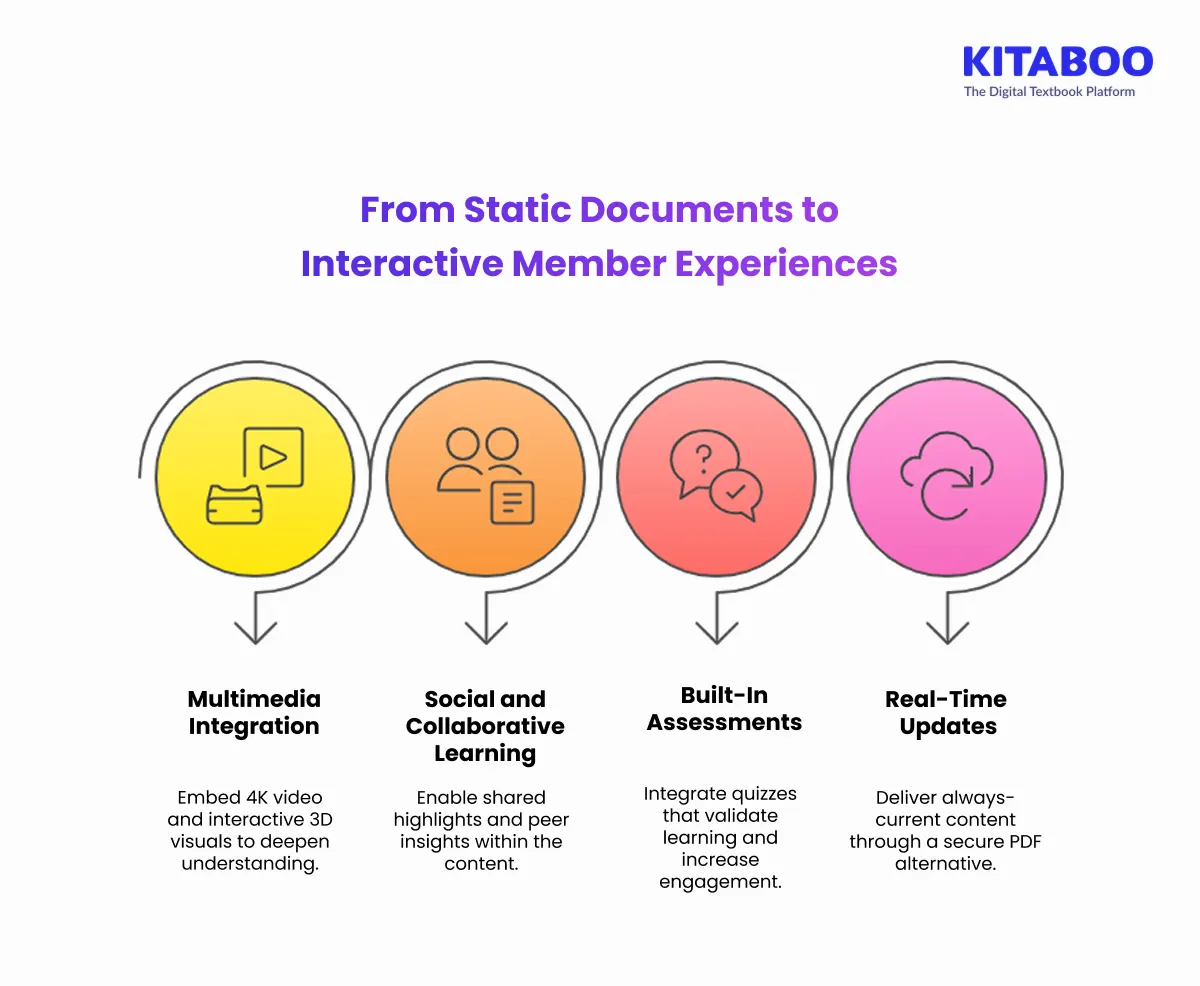
1. Multimedia Integration: From Theory to Application
What happens when your content shows instead of just telling? A modern medical guideline can embed a 4K surgical video directly within the chapter. They see it in high-definition detail at the point of instruction.
The same principle applies to policy and research content. A policy brief can include an interactive 3D chart that responds instantly to user input. Members can explore projected outcomes from multiple angles. Complex data becomes visual and easier to interpret.
Interactive elements transform passive reading into active engagement. Quizzes, audio clips, and 3D models reinforce key concepts. This improves retention and strengthens professional development outcomes.
2. Social and Collaborative Learning
What if your content could spark conversation, not just consumption? Professional growth thrives on shared insight. Yet static PDFs isolate members in a one-way reading experience. Instead of distributing static files, you deliver interactive, mobile-responsive content that strengthens peer learning and engagement.
Interactive eBooks enable shared highlights and collaborative note-taking. A senior member can mark a critical passage for others. Junior members can instantly see those insights and context. This transforms reading into a collaborative mentorship environment.
3. Built-In Assessments and Certification Support
How do you know your members truly understood the material? Static PDFs cannot answer that question. They deliver content, but they do not measure learning.
Interactive platforms embed quizzes and knowledge checks within the content. Members can validate understanding as they progress. This strengthens certification programs and increases completion confidence. It also enhances engagement by turning reading into active participation.
4. Real-Time Updates and Version Control
What happens when critical information changes overnight? With static PDFs, outdated versions continue circulating. That creates confusion and compliance risks.
An interactive PDF alternative allows instant cloud-based updates. Members always access the most current version. This improves engagement, transforms reading experience, protects content credibility, and reinforces long-term member trust.
Are Static PDFs Limiting Your Non-Dues Revenue Potential?
Have you measured how much revenue slips through PDF Sharing? Traditional PDFs are easy to forward and difficult to protect. Once downloaded, control is lost. That makes monetization beyond a basic paywall challenging.
If you want sustainable non-dues revenue, format matters. A static file limits pricing flexibility and value perception. A secure PDF alternative creates structured, monetizable experiences. It turns content into a scalable revenue asset.
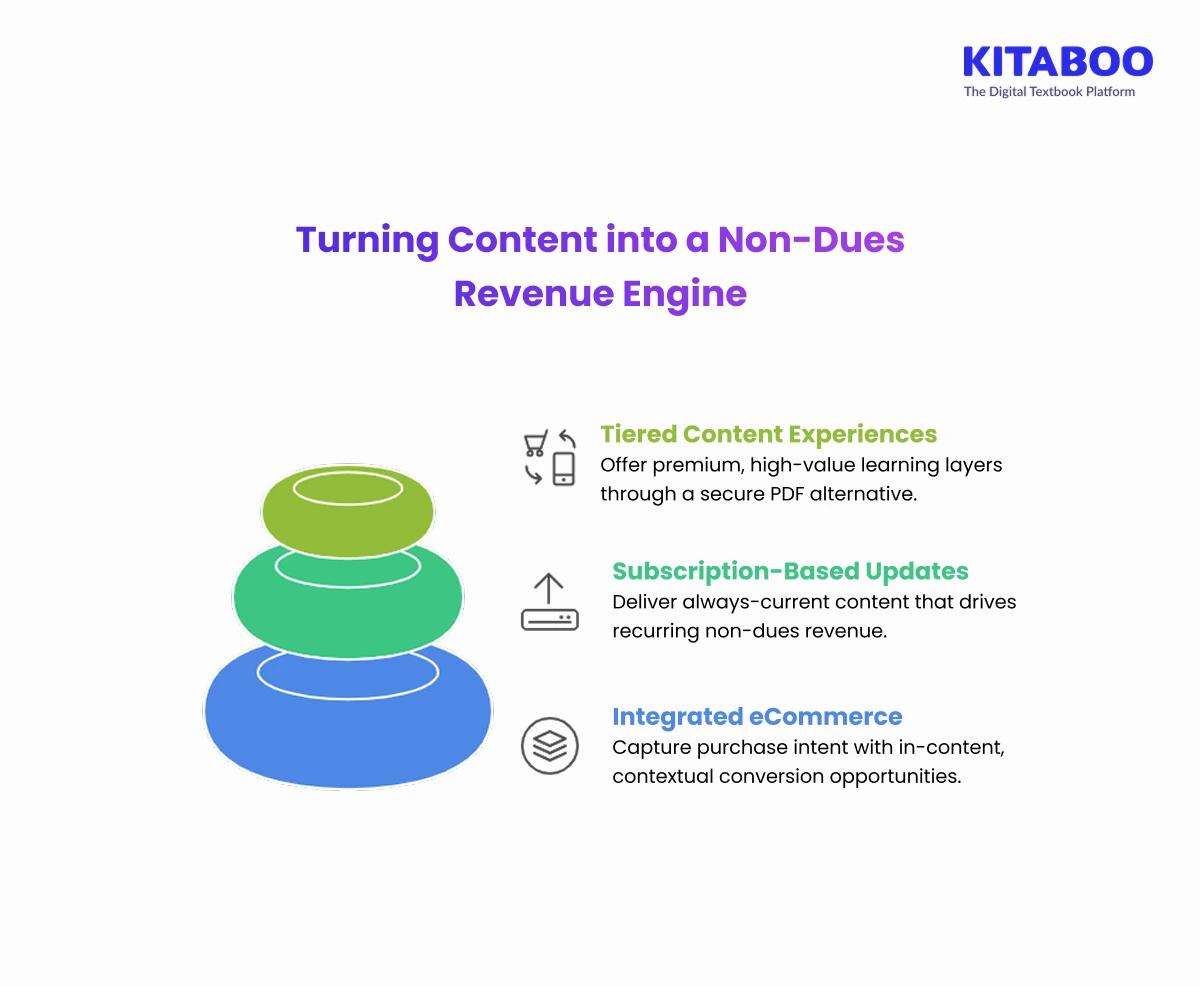
1. Tiered Content Experiences
Not every member needs the same level of access. An interactive platform allows tier-based content packaging. A standard tier may include core reading material. A premium tier can include masterclass videos and self-assessments.
You can also add ‘Ask the Expert’ widgets and advanced resources. This layered model increases perceived value. It enhances engagement while driving predictable revenue growth.
2. Real-Time Updates as a Subscription Value
In healthcare and technology, information changes quickly. Static PDFs freeze knowledge at one moment in time. That limits long-term relevance.
An interactive platform enables instant cloud-based updates. Members pay for continuous accuracy, not a one-time download. This subscription-based model strengthens retention and recurring non-dues revenue.
3. Integrated eCommerce
What happens when purchase intent peaks during learning? Static PDFs cannot act at that moment. They separate content from conversion.
Modern platforms enable contextual commerce within the content itself. If a member is reading about a certification, a “Register for Exam” button can appear instantly. The action sits exactly where intent is strongest.
This reduces friction and shortens the decision cycle. It captures revenue at the moment of highest engagement. Instead of passive reading, you create a seamless path from interest to transaction.
How Can Your Association Prepare for the Shift Beyond Static PDFs?
Moving away from static content is not a simple format change. It is a strategic shift in mindset and operations. It affects how your team creates, delivers, and measures value.
Adopting a secure PDF alternative requires planning and clarity. The objective is stronger engagement and measurable outcomes. When executed well, the transition strengthens both member experience and revenue strategy.
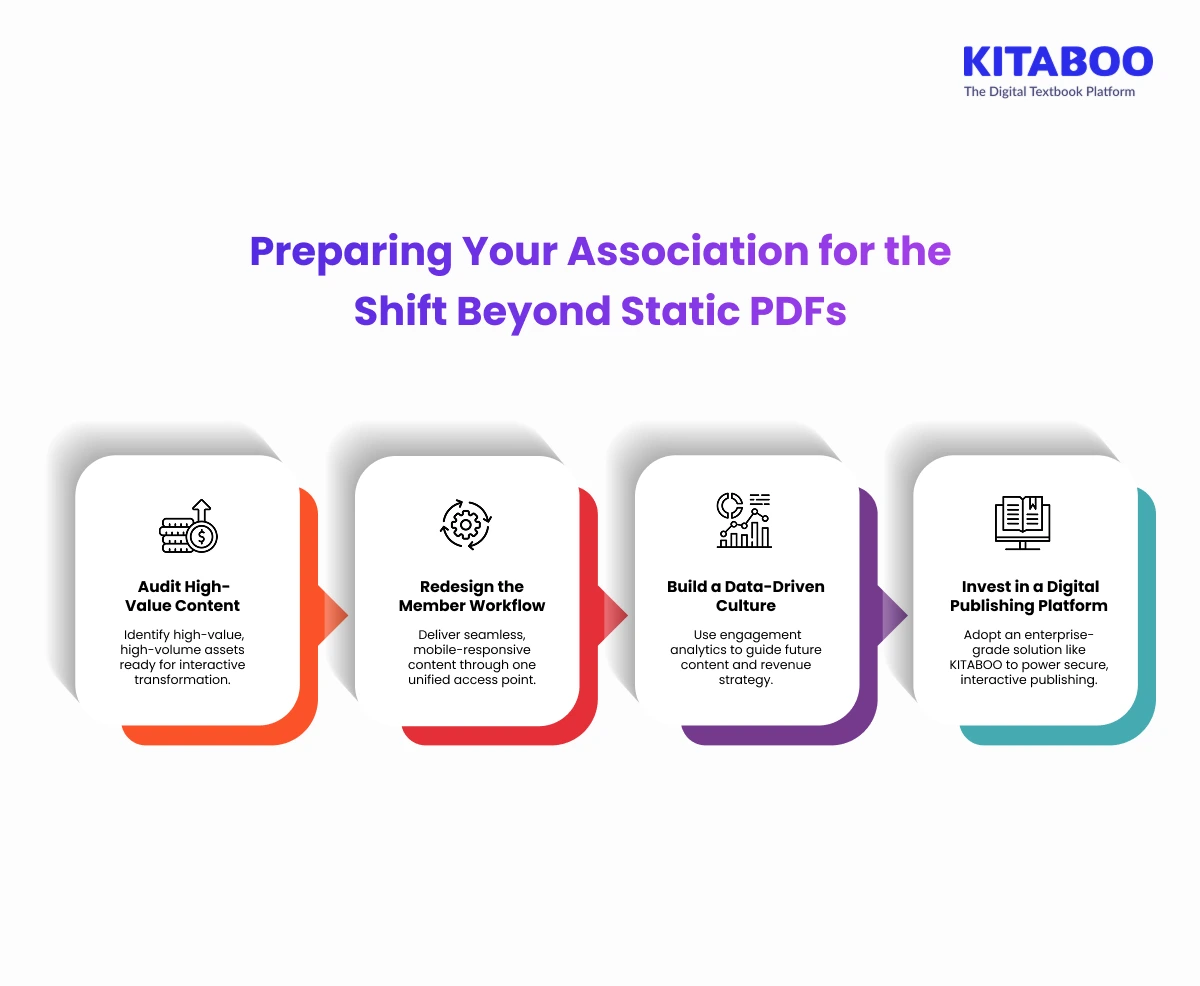
1. Audit Your High-Value Content First
Start with a structured content audit. Identify high-value, high-volume assets across journals and certification programs. Focus on content that drives revenue and member engagement.
Do not attempt to convert everything at once. Prioritize assets with measurable strategic impact. Early success builds confidence across leadership and content teams. Map each asset to a defined objective. Is it engagement, retention, or non-dues revenue? Clarity at this stage reduces wasted effort later.
2. Redesign the Member Workflow Intentionally
Transformation fails when the workflow is ignored. Members should not feel the complexity behind the change. Access must remain simple and intuitive. Select a platform that integrates directly with your Association Management System (AMS).
Members should experience one login and one unified content library. Seamless, mobile-responsive content should be standard across devices. Test the experience before full rollout. A smooth workflow accelerates adoption and long-term usage.
3. Build a Data-Driven Content Culture
Interactive platforms generate valuable engagement data. Heatmaps reveal which sections attract attention. Drop-off points expose weak areas in content. Your team must commit to using these insights.
Data should inform conference themes and webinar topics. Engagement metrics should guide future content investments. Moving to a digital-first model means replacing assumptions with evidence. That cultural shift is as important as the technology itself.
4. Invest in the Right Digital Publishing Platform
Technology choice determines scalability and control. A basic tool will not support long-term growth. You need a secure, enterprise-grade PDF alternative built for associations.
Look for advanced Digital Rights Management, analytics, and real-time updates. Ensure the platform delivers secure, Mobile-responsive content across devices. It should support monetization, certification, and eCommerce workflows.
KITABOO is purpose-built for this transformation. It enables interactive publishing, version control, and deep engagement insights. For associations ready to move beyond static PDFs, KITABOO provides a future-ready foundation.
Conclusion
Association value is measured by engagement and impact. Members expect seamless, Mobile-responsive content across every device. Static PDFs cannot meet those expectations. Uncontrolled PDF Sharing continues to weaken revenue protection and content visibility.
The real shift is not about abandoning digital files. It is about adopting a credible alternative to the pdf format that supports engagement and monetization. A modern PDF alternative enables interactive learning, secure distribution, and measurable insights. This transformation positions your association as forward-thinking and member-focused.
KITABOO is the best platform for associations and societies seeking a scalable alternative to the pdf format. It delivers interactive eBooks, secure publishing, advanced analytics, real-time updates, and revenue-ready workflows in one unified environment. Schedule a personalized KITABOO demo today and see how your content can become a strategic growth driver.
Summary
Associations are losing revenue and visibility due to uncontrolled PDF Sharing. Static files circulate easily and provide no engagement data. At the same time, members expect seamless mobile-responsive content across devices. Relying only on PDFs creates both experience and revenue gaps.
The solution is not simple digitization. Associations need a secure alternative to the pdf format that enables interactivity and analytics. A modern PDF alternative reduces PDF Sharing risks and strengthens monetization control. It also delivers measurable engagement insights that static files cannot provide.
Platforms like KITABOO make this transition practical and scalable. They deliver secure, mobile-responsive content with real-time updates and analytics. As a proven alternative to the pdf format, KITABOO helps associations close the Experience Gap. The result is stronger engagement, protected revenue, and long-term growth.
Discover how a mobile-first training platform can help your organization.
KITABOO is a cloud-based platform to create, deliver & track mobile-first interactive training content.

![Top 10 Free Publishing Sites for Independent Publishing [2026]](https://kitaboo.com/wp-content/uploads/2025/09/Top-5-Free-Publishing-Sites-for-Independent-Publishing-2026-420x235.webp)